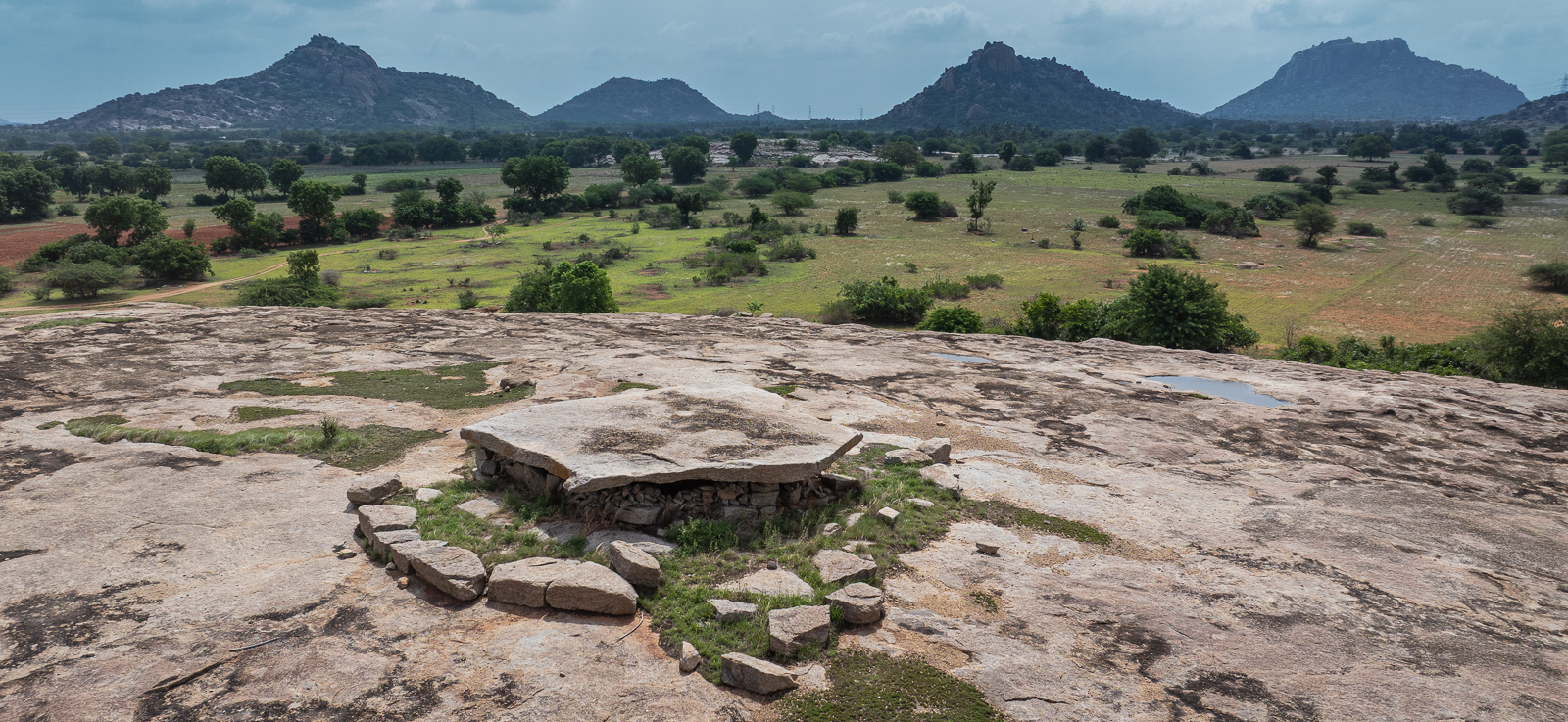
Hidden in the landscape of Karnataka, the megalithic monument at Nalliganahalli offers a remarkable glimpse into a civilization that flourished nearly 2,000–3,000 years ago. Though modest in appearance, this ancient structure is an important reminder of the region’s rich archaeological heritage and the stories that still lie buried beneath the earth.
The monument is classified as an Irregular Polygonal Chamber (IPC), a distinctive type of megalithic burial chamber constructed from carefully arranged stone masonry. It is capped by an enormous stone slab, creating a chamber large enough to resemble a small room. The precision of its construction reflects the engineering skills and funerary traditions of the communities that built it.
One of the reasons this monument has survived for centuries is the respect and protection it has received from the local community. While many megalithic burials in the surrounding region have suffered damage due to treasure hunting and natural deterioration, this structure continues to stand largely intact, preserving an important chapter of Karnataka’s ancient past.
Scattered around the monument are several cup marks – small, deliberately carved depressions in the rock that are commonly associated with prehistoric sites. Their exact purpose remains uncertain. Archaeologists have proposed various interpretations, including their use as percussion points, ritual features, or elements connected with agricultural practices. Like many aspects of megalithic culture, these markings continue to invite research and discussion.
Despite its significance, much about the Nalliganahalli site remains unknown. Only systematic archaeological excavation and scientific study can reveal the full history of the monument, the people who built it, and the cultural traditions they left behind.
Sites like Nalliganahalli remind us that history is not confined to museums. It survives in landscapes, stones, and the collective memory of communities that have quietly safeguarded these places for generations. Preserving and documenting such monuments is essential if we are to better understand Karnataka’s remarkable archaeological legacy.
CHECK THE IMAGE HERE
View this post on Instagram