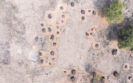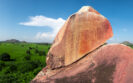
Nestled beside the ancient settlement of Rakkasa Beelu, this remarkable rock shelter preserves one of the most significant examples of prehistoric art in Hirebenakal.
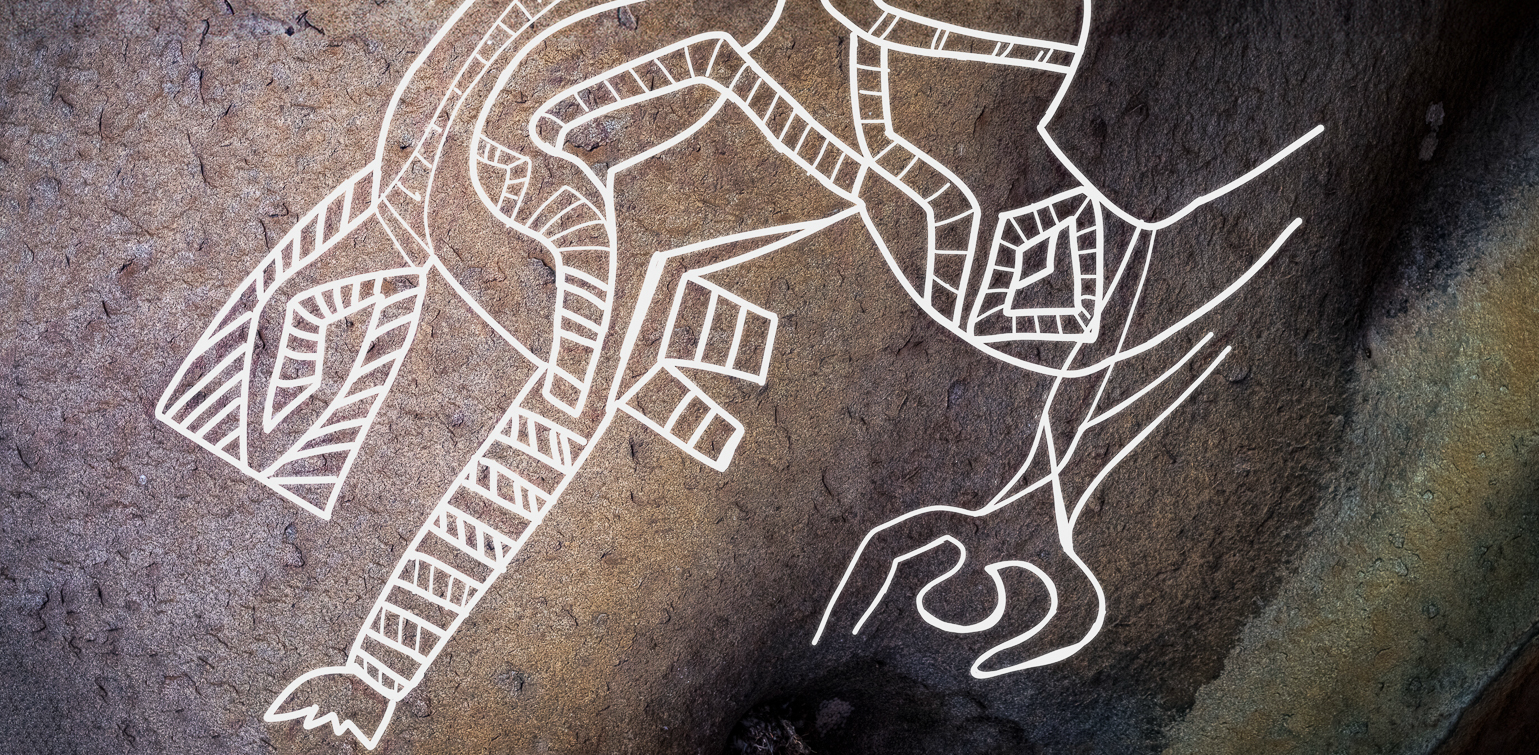
Spread across a vast ceiling measuring nearly 16 feet wide and 13 feet long, the painting popularly known as the “Pregnant Lady” continues to captivate researchers and visitors alike. Believed to date back to the Neolithic period, this extraordinary artwork is estimated to be over 5,000 years old.
Despite centuries of weathering and fading, the figure still retains striking detail, showcasing impressive brushwork and artistic precision. Scholars have offered multiple interpretations of the image, some view it as a representation of pregnancy or childbirth, while others suggest it may be an early form of X-ray-style depiction, revealing internal anatomical features in a symbolic way.
The shelter itself is equally impressive in scale. Massive in size and capable of housing large groups, it remains one of the most important rock art sites in the Hirebenakal region, offering valuable insight into the lives, beliefs, and artistic expression of prehistoric communities.
To aid modern viewers in interpreting the faded artwork, an illustrated reconstruction has been included, providing a clearer visualization of the original painting.
Follow @projectskaat as we continue documenting and bringing these ancient shelters closer to you.
CHECK THE IMAGE HERE
View this post on Instagram