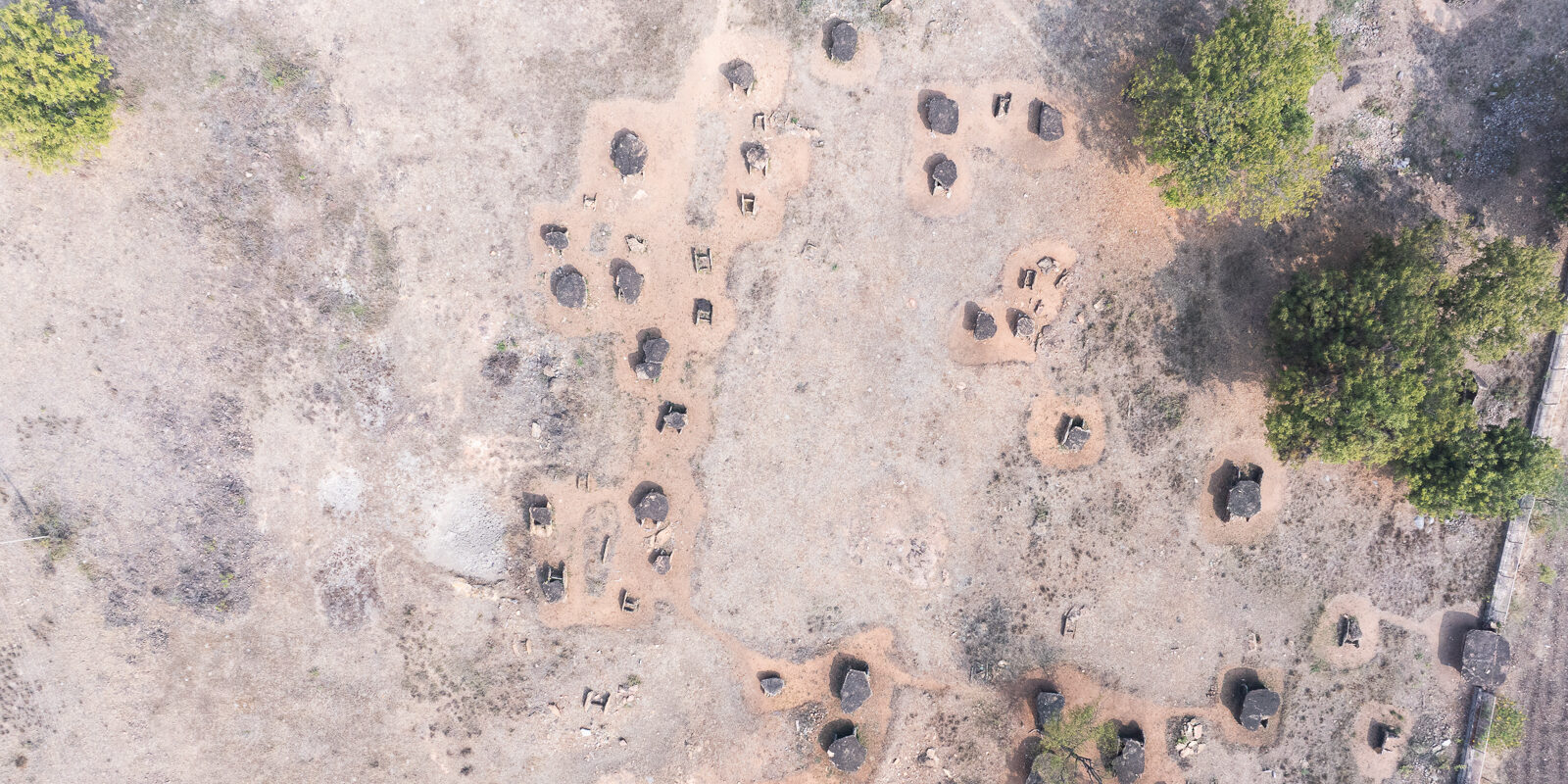
Hidden within Karnataka’s rich archaeological heritage lies RajanKolur, one of the state’s last well-protected megalithic burial sites. Quiet and unassuming, this ancient landscape offers a remarkable glimpse into the engineering, beliefs, and burial practices of communities that lived here thousands of years ago.
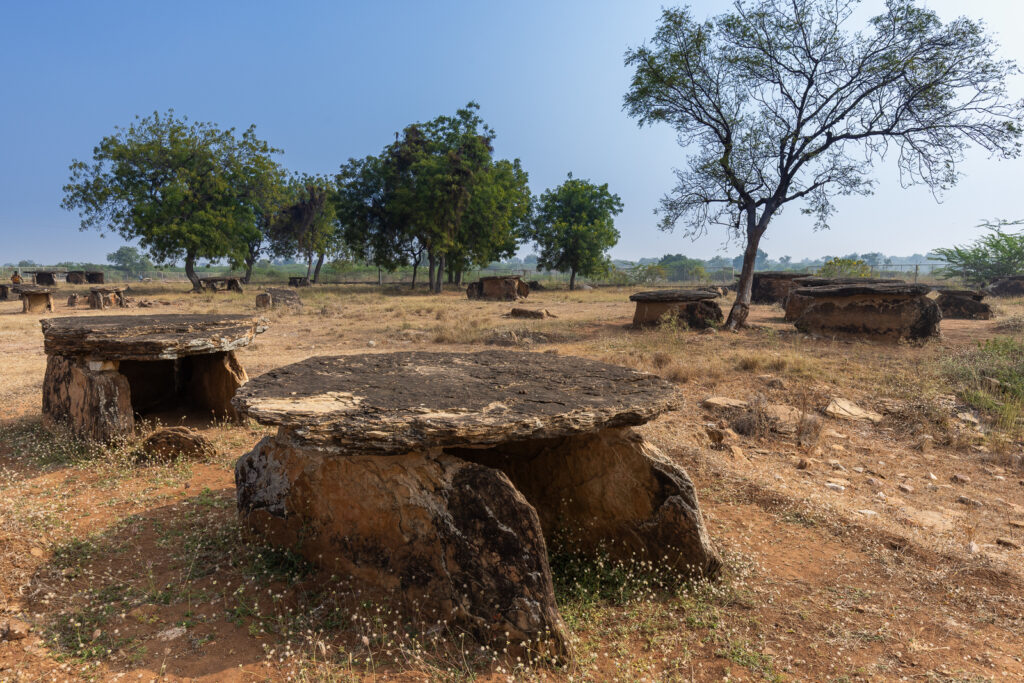
The site is home to an impressive variety of dolmens, stone-built burial monuments formed by upright slabs supporting a massive capstone. As you walk among them, you’ll notice striking variations in their construction. Some are built with three supporting slabs, others with four. Some feature the distinctive porthole opening often associated with megalithic burials, while others remain completely enclosed.
Scattered throughout the landscape are cists, carefully constructed box-like stone chambers, many of them partially buried beneath the earth. A closer look reveals the ingenuity of their builders. The longer side slabs extend beyond the shorter end slabs, creating a stable interlocking structure designed to withstand the passage of time. Centuries later, many of these chambers still stand as testimony to that ancient knowledge.
RajanKolur is more than an archaeological site. It is a living reminder of the people who once inhabited this land, their craftsmanship, their understanding of stone, and the ways they chose to honor their dead.
Every dolmen and cist tells a story. Together, they form a silent archive of human history, inviting us to pause, observe, and appreciate the enduring legacy beneath our feet.
As we continue documenting Karnataka’s prehistoric heritage, places like RajanKolur remind us why preserving these ancient landscapes matters. They connect us not only to the past, but also to the generations whose ingenuity helped shape the world we inherit today.
CHECK THE VIDEO HERE
View this post on Instagram