We arrived at Watgal searching for traces of prehistory.
Instead, history found us through a group of school children.
They moved across the landscape with ease, pointing out forgotten forts, ancient carvings, and even rocks that could sing.
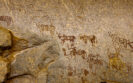
Among them were the remarkable rock gongs — carefully balanced stones believed to date back nearly 3,000–4,000 years, alongside the Neolithic petroglyphs and ash mounds found in the region.
At first glance, they appear like ordinary rocks. But strike them gently, and they resonate with a deep metallic tone.
The worn beat marks across their surfaces reveal something extraordinary: these were not merely prehistoric remnants preserved by chance. They were instruments, used and played across generations, surviving well into historical times.
What stayed with us even more was this question — how did these children know so much about a place most people have never heard of?
The answer was unexpectedly simple.
Years ago, a local teacher began bringing students here, telling them the stories hidden in their own landscape. That single act of curiosity quietly turned children into custodians of heritage.
Long before archaeologists, maps, or guidebooks, communities remembered history through memory, sound, and storytelling. In Watgal, that tradition still survives.
Places like these remind us that history does not always live behind museum glass. Sometimes it echoes through a stone in a forgotten field, waiting for someone to strike it and listen.